
The Artwork
Each year, Blue Mound Graphics prides itself on the efforts that go into curating our calendar imagery. Great care goes into ensuring that our calendars are pleasing to the eye and representative of the essential values of the Catholic community. So, we are delighted to share our 2025 calendar offerings.
And what better way to showcase our 2025 line than to provide context to the cover image of our most popular calendar line, Traditional Catholic Art?
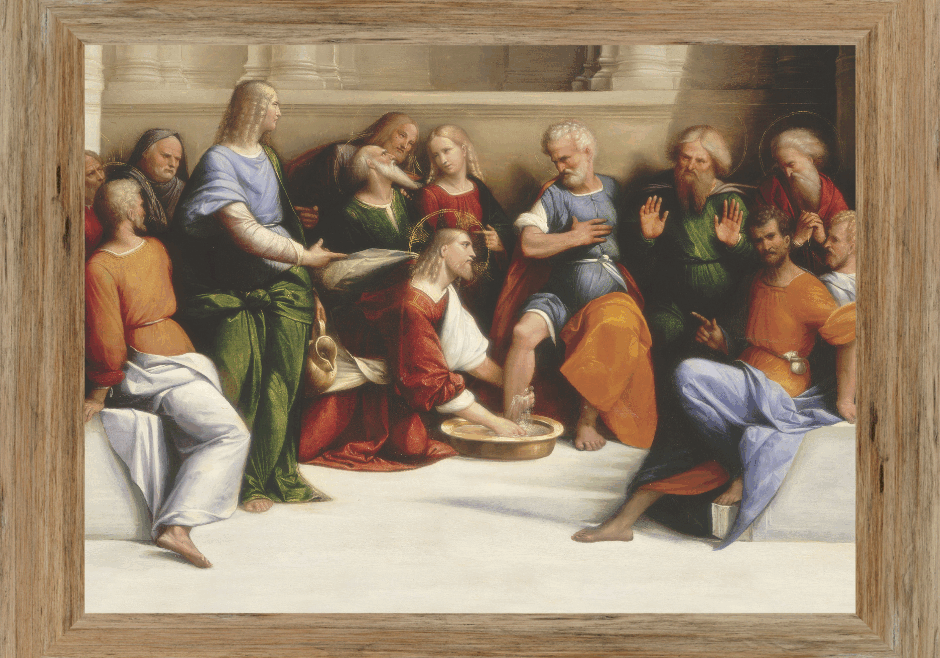
The 2025 Traditional Catholic Art calendar features a striking painting in both quality and content, Christ Washing the Disciples’ Feet, composed by Italian painter Garofalo between 1520 and 1525.
This moment during The Last Supper is described in the Book of John, Chapter 13, with Jesus rising from the meal, pouring water into a basin, and washing the feet of the Twelve Disciples. Initially, Peter is hesitant to have Jesus perform this act of humility, but accepts when (John 13:8) Jesus tells him, “Unless I wash you, you have no part with me.” To which Peter responded, “Then Lord, [wash] not just my feet but my hands and head as well!”
Jesus washed the disciples’ feet to teach them the importance of servanthood. The Bible reads (John 13:14–16):
“Now that I, your Lord and Teacher, have washed your feet, you also should wash one another’s feet. I have set an example that you should do as I have done for you. Very truly I tell you, no servant is greater than his master, nor is a messenger greater than the one who sent him.”
In the painting, Garofalo uses his masterful command of the brush to depict a quintessential scene from the New Testament. Jesus Christ and the Twelve Disciples appear to almost glow through expert use of contrast, signifying their holiness along with the halos that surround their heads. Also noteworthy are the figures’ robes and togas, which exhibit some of the most lifelike realism of the era.
The original painting is currently housed at the National Gallery of Art in Washington, D.C., though it is not on display.
The Artist
Garofalo (1481–1559), best known for painting small and carefully represented religious subjects, was one of the leading painters of Ferrara, Italy, in the 16th century. Most believe that Garofalo was trained by fellow Ferrara painter Boccaccini of Cremona (1497–1500). According to Arezzo painter and architect Giorgio Vasari, two visits Garofalo made to Rome influenced his painting style, which has been described as cautious and old-fashioned compared to his more contemporary peers.
Stay Updated
Join our community for the latest blog updates and exclusive news delivered straight to you.